
Understanding E-E-A-T and AI Content: The Google 2026 Update
How to maintain Expertise and Trustworthiness while using AI for content creation.
3/14/20265 min read
Understanding E-E-A-T and Its Importance
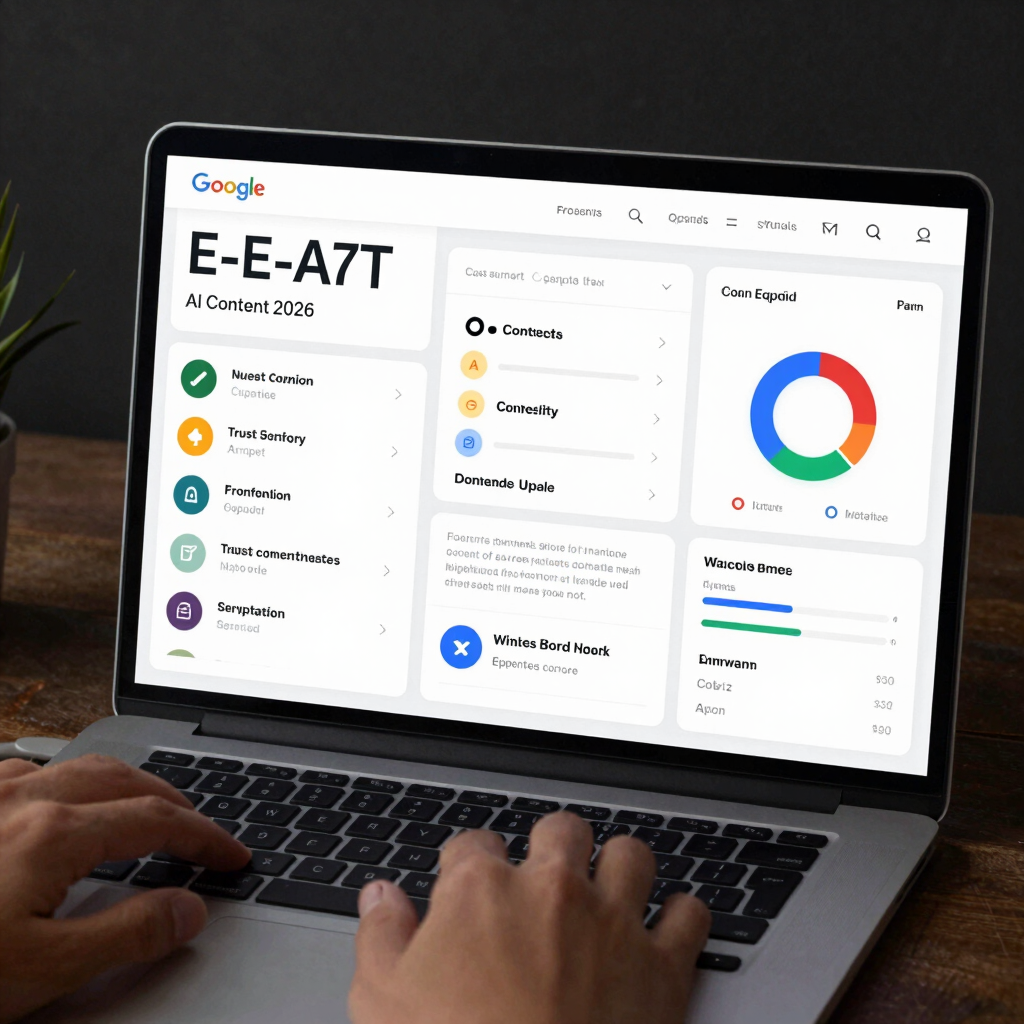
E-E-A-T, which stands for Expertise, Authoritativeness, Trustworthiness, and Experience, is a framework established by Google to assess the quality of content on websites. This metric plays a critical role in influencing search engine rankings and is especially significant in the context of content that pertains to topics requiring a high level of expertise, such as health, finance, and legal matters. Google’s paid quality raters utilize E-E-A-T as a guideline to determine how well a piece of content meets its standards, which ultimately affects the visibility of a website in search results.
The importance of E-E-A-T lies in its ability to gauge not just the accuracy of information but also the credibility and reliability of the content creator. For instance, a health-related article authored by a certified medical professional would likely be regarded as having higher E-E-A-T compared to similar content produced by someone without formal credentials. Thus, businesses aiming to enhance their online presence should ensure that their content reflects clear evidence of expertise and authoritative sources.
In recent years, the significance of E-E-A-T has only grown more pronounced, particularly with the advent of AI-generated content. As search engine algorithms evolve, they increasingly favor content that meets E-E-A-T standards. For example, websites with robust evidence of trustworthiness, such as user testimonials and reputable backlinks, often enjoy better search engine rankings. Consequently, applying E-E-A-T principles can be a strategic advantage for businesses looking to optimize their content strategies in light of updates like the anticipated Google 2026 update.
In sum, understanding and implementing E-E-A-T can be vital for businesses seeking to establish credibility online and improve their search engine rankings, enabling them to reach a broader audience and enhance user trust.
The Role of AI in Content Creation
The integration of artificial intelligence (AI) in content creation has revolutionized the way digital content is produced and consumed. AI-driven tools have emerged as essential assets for writers and marketers, allowing them to streamline their workflows and enhance productivity. These tools can analyze vast amounts of data to generate insights, mimic human writing styles, and even produce entire articles, thereby influencing how content is crafted and distributed.
One primary advantage of utilizing AI in content creation is its efficiency. AI can rapidly generate content, which is particularly beneficial for businesses that require a high volume of articles or posts in a short timeframe. This increased efficiency can lead to cost savings and allow content teams to focus on more strategic tasks, such as ideation and audience engagement. Additionally, AI tools can assist in scaling content production, making it easier for organizations to reach broader audiences across various platforms.
However, the reliance on AI also has its drawbacks, particularly regarding E-E-A-T (Experience, Expertise, Authoritativeness, and Trustworthiness) metrics. While AI-generated content can be informative, it may lack the human touch that is crucial for establishing authority and trust with readers. Maintaining authenticity in content becomes challenging when relying heavily on AI, as automated processes may not always align with a brand's voice or values. Furthermore, over-reliance on AI could result in a homogenization of content, where uniqueness is sacrificed for volume.
To navigate these challenges, it is important to strike a balance between human creativity and AI capabilities. Utilizing AI tools, such as content generators and language models, can enhance content marketing efforts without compromising quality. Writers should leverage AI for preliminary drafts or data analysis while ensuring that the final output is infused with human insights and experiences. This collaborative approach can help ensure that content remains engaging, trustworthy, and aligned with E-E-A-T principles.
Impact of the Google 2026 Update on Content Strategies
The anticipated Google 2026 update represents a significant shift in how search engines evaluate content, with a pronounced emphasis on E-E-A-T, which stands for Experience, Expertise, Authoritativeness, and Trustworthiness. This evolution in Google's algorithms is expected to dramatically influence content strategies across various sectors. As the digital landscape continuously evolves, content creators and businesses must be prepared to adapt their strategies to align with these changes.
One of the primary impacts of this update will be the heightened importance of quality over quantity. Search algorithms will increasingly prioritize content that demonstrates genuine expertise and real-world experience. This shift implies that brands will need to invest in high-quality content that is not only well-researched but also offers unique insights and valuable perspectives on the subject matter. Therefore, content creators may need to adopt a more rigorous approach to content production, utilizing industry experts to enhance the credibility of their offerings.
Furthermore, the update is likely to lead to a reevaluation of what constitutes authority in the digital space. Businesses that can showcase their expertise through detailed, informative, and user-centric content are likely to perform better in search results. This means that organizations should focus on developing content that answers users’ queries effectively while integrating authentic experiences and testimonials where possible.
Moreover, as search engines prioritize trustworthiness, transparency will also become essential. Providing clear information about authors and their qualifications can strengthen the perceived authority of the content. Content creators should consider proactively sharing their background and experiences to build trust with their audience. In summary, aligning content strategies with the E-E-A-T framework necessitates a commitment to quality, transparency, and authentic engagement, ensuring that businesses remain competitive in an increasingly discerning digital environment.
Best Practices for Enhancing E-E-A-T in AI-Generated Content
As AI-generated content becomes increasingly prevalent, ensuring that this content adheres to the principles of Experience, Expertise, Authoritativeness, and Trustworthiness (E-E-A-T) is critical. The integration of E-E-A-T frameworks not only enhances the quality of AI-produced information but also fosters user confidence. Here are several best practices for enhancing E-E-A-T in AI-generated content.
First and foremost, human oversight is essential. Although AI tools can generate content efficiently, human experts should review and refine this content to ensure accuracy and relevance. By incorporating expert insights and corrections, the trustworthiness of the content is significantly elevated. Additionally, creating a feedback mechanism allows readers to flag inaccuracies, further enhancing content reliability.
Secondly, methodologies for verifying the accuracy of AI-generated content should be established. This can include fact-checking against reputable sources, ensuring that the information presented is not only current but also reliable. In this way, AI systems can maintain a high standard of quality that aligns with E-E-A-T principles.
Another critical strategy involves transparency in content creation. Clearly stating the qualifications of content contributors, including their expertise and experience, can significantly improve the perceived authority of the material. Moreover, indicating the role of AI in content generation helps audiences understand the origin of the information, further increasing trust.
Case studies of organizations effectively implementing E-E-A-T in AI content provide valuable insights. For instance, a health-focused website that employed medical professionals to validate AI-generated articles demonstrated significant improvements in user engagement and trust. Such examples can serve as models for others aiming to enhance E-E-A-T within their own content strategies.
By following these best practices—ensuring human oversight, verifying factual accuracy, enhancing transparency, and learning from successful case studies—content creators can significantly enhance the E-E-A-T of AI-generated content. This not only bolsters user confidence but also aligns with evolving standards in digital information dissemination.